Sunday, 15 April 2012

Research into comedy film openings

Here are some generic conventions usually found in comedy films:
  • A happy ending
  • Normally 2 to 3 main protagonists
  • Upbeat music
  • Characters placed in stereotypical groups by their costumes and behaviour
  • exaggeration of social situations (embarrassing moments)
Comedy films are designed to:
-Make you laugh
-Make you feel good
-Escape your life and worries while watching it

To extend my knowledge into comedy film openings, I felt it important to do two more film opening analysis's.  This time i will research into comedy film openings and i will relate them to our project.

Hot Fuzz (2007)

Immediately at the film opens, it seems quite serious and tense due to the lack of music and the sound of footsteps. Then, as soon as the non-diegetic music is introduced alongside the dialogue, it is clear to tell that this is not a serious movie, this is the first, and main indication of the comedy genre in the film opening. This poses the question for when we create our film opening, should we show the comedy genre straight away?
The titles are large, but not intrusive of the pictures. The titles are in a clear, readable font, but the font does not suit the comedy genre, on the other hand it also doesn't portray any other genre, it is plain and simple. I like the way, that to emphasis the institutional names, they use the same font, but just of a larger size. We have to really think about what font we should use, as i have learnt that the font says a lot about your movie.
The combination of diegetic sounds, non-diegetic bouncy music and narrative dialogue in the opening, adds to its fast pace, and also brings a sense of excitement to the films opening scenes. The opening uses very fast paced editing, which would probably make no sense at all without the voice over, but together, makes a successful combination. There are a very large number of camera angles and shots used throughout the opening, the shots such as the long shot, combined with the mise en scene shows us the protagonists occupation is as a policeman. You can see what is included in every shot, even though some are very short, this makes the opening easy to follow for the audience. The opening follows generic conventions in the respect that it has two protagonists. 

Drop Dead Fred (1991)

This opening sequence is unlike any i have seen before, in the respect that, it looks as if the whole opening was drawn by a child, alongside the childish handwritten titles. The opening has a non diegetic soundtrack running throughout, this music continues the child like theme, it's very fast paced and sounds as if it has been taken from a children's TV program or a circus. We need to consider our soundtrack to make sure it suits the theme. The soundtrack they have used, alone is enough to make the audience realise this is probably not a serious film. All the titles look as if they have been written by a child in crayon, and to emphasis the childish theme, some words, such as 'by' are even spelt wrong. Although the titles follow this theme which could potentially make the words unclear, all the titles are easily readable in the opening. Most title sequences tend to make the visual action prominent above the titles, whereas this sequence is based around the titles themselves, adding to the originality of the these opening credits. This makes me think that we need to chose what is the most important aspect of our film opening.  This film opening follows the generic conventions of comedy films as the soundtrack is up beat and amusing and what is seen on screen is lighthearted, funny and not to be taken seriously.  


Monday, 12 March 2012

History of the film institution logo

Institutional titles and logos are always put right at the start of any film, its the way an institution brands what they produce. The institutional logo has been around since films began. As with the films, the logos started out very simple, with just a silent, motionless picture, but through time they have evolved. Soon the institutions started to get competitive with their logos, and with the introduction of sound and animation, the institutions would start to try and out do each other. A good example of how competitive this got, was MGM in 1924, including a real lion called Leo into their logo piece. By 1976, all major studios except Universal had switched their logos to animation. The 1980's saw the return of the old style logos, with Warner Brother bringing back a previous logo they had used. In the 90's, Universal completely remastered their logo to celebrate their 75th anniversary. By 2007, all institutional logos were produced on a computer.
Mainstream institutional logos and independent film institutional logos are very different. The Mainstream logos are more complicated, these are those i have explained above, production companies are more well known, therefore they have more money to spend on technology that allows them to create a logo. On the other hand independent film production companies do not have as much as funding compared to mainstream film production companies so this stops them from making visually spectacular logos.

Below is an example of a mainstream institution logo (top) and an independent institutional logo (bottom).

Knowing this will help my group when we decide on our Gemini logo. We have discussed that our movie would be an independent British film, meaning we would be looking more towards the less complex logos, that would be easier and cheaper to create.

Tuesday, 28 February 2012

Comedy films and their storylines

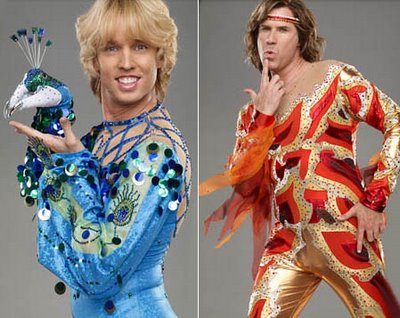
Blades of Glory (2007)
When looking at comedy films and their story lines, one thing that is noticeable is that, although themes of comedy films are very varied, most tend to follow the same basis. The stereotypical narrative of a film is of course having a beginning, middle and end. In comedy films these sections usually run as follows:
-Beginning - A problem occurs
-Middle - The problem is faced
-End - The problem is conquered - A happy ending


Lots of comedy films follow this structure, as it is a successful combination for a comedy film. When planning our film opening, we will have to also plan the whole movie, we think we will use this structure to create our story line around, hopefully resulting in a good comedy film.

Monday, 27 February 2012

Comparing popular comedy films


Up (2009) and Toy Story 3 (2010)
These two comedy films are both recent and very popular in comedy film ratings. The first and main thing to notice is that they are both cartoons, showing that good actors are not always essential in physical form in comedy films. The second thing you spot is that at first glance they both seem to be aimed at the children's market, but what i believe the appeal and success of these films is down to, is the fact that anyone of any age can watch and enjoy them. These films both combine fun, and touching moments but nothing too serious which attracts the large portion of comedy audiences. The difference between them is that Toy Story 3 was the third in the Toy Story series of films, meaning success was expected, this is a good technique to guarantee audiences to watch your film, this is shown by films such as Shrek and Pirates of the Caribbean. Whereas Up, was a one off, that turned out to be a hit.  
 

The Artist (2011) and School of Rock (2003)
These two comedy films are very different, and yet both very successful in their own way. School of Rock has all the common conventions of the modern comedy film, whereas The Artist goes completely against the 21st century average comedy film but this could be the reasons for it's huge success. School of Rock was a comedy film that attracted all ages of comedy fans, it is quite a predictable and 'safe' comedy to go and see because you almost know it will be funny. Whereas The Artist has not had massive audience numbers, but has dominated the awards this year, proving that it is a very good film. The reason for the lack of audience is because it is a silent, black and white movie, something that is almost unheard of these days. From these two films, the extent of differences between comedy films are shown, showing that almost anything can be a success in the comedy genre as long as it is funny.
   

Doing this will help me when i create my film, as it has taught me that there are a huge range of comedy films, meaning we can be very creative with our ideas. I have learnt that you can make films of this genre in almost any way and they could be successful, such as a cartoon or even in silence. I also now know that comedy films can be made to suit any certification, so we are free to choose any age group for our target audience. 

History of group genre

As a group we have chosen that our film we will make an opening for, will be a rural comedy. So in preparation for creating our opening, we felt it important to do some research into our chosen genre.

History of the genre

Comedy is one of the oldest genres in film, some of the first ever silent movies were comedies, way back in the 1900's. Comedy worked well for silent movies, as it can be dependant on the visual action, rather than sound. They relied upon the actors' talents with timing and physical theatre. One of the earliest types of comedy used in silent movies was Slapstick which was made popular by Charlie Chaplin, Harold Lloyd and Buster Keaton. Slapstick humour revolved around physical mishap, accidents and practical jokes.
With the rise of sound in films in the 1930's, comedy scrip writers could now incorporate jokes and make complex story lines, which brought a whole new level to comedy films. Dialogue became the centre of comedies. One of the first new styles that emerged within comedy films, was the Screwball comedies which were short movies that featured over the top physical humour, that was common in cartoons of the day, a modern example of this is Mr Bean. When the 40's came, most of the comedy films were based around war or military themed. In the 50's comedy films were in decline due to the invention of the television, but the 60's saw a move towards comedies that used satire to address social change. The 1970s saw the rise of the dark comedy and parody amongst the genre. The 1980's saw a popularity of teen comedies and the start of action comedy films. In the 1990s, actors who could create larger-than-life characters using exaggerated voice, movement and expression dominated comedy, these included Jim Carrey, Adam Sandler and Mike Myers, they became household names.

Some types of comedy that has evolved over the years, include dark comedy, subjected on a taboo subject such as war, and they are  based on fictional storeys. These comedies deal with dark and serious themes. Spoofs, which take films or documentaries of other genres and remake them, mocking them and using sarcasm. A popular type of comedy in films today, is the romantic comedy, where upon the film is based around a developing relationship for two characters, this is partially popular with females.
These days, unlike other genres, comedy has a fan base that is not limited by age or gender, as there are so many types of comedy films.

Tuesday, 14 February 2012

Our Target Audience

Our film 'Rural Superheroes' is a comedy film with a rural sub genre. It would most probably appeal to those in demographic grouping E and D, as we have a target age range of 13-18, meaning most of our target audience would be students placing them in the E category.
As it will be a British independent movie, is is most likely to be seen and enjoyed by British teenagers and those that live in the UK. Although, if seen in any other country or by people from different ethnic backgrounds, it will not be offencive in any way.
As our film is a variation of the common superhero movie, we decided that the audience that would like to watch our film, would be similar in personality, to those characters in our film. Their interests would include comic books, on line gaming and seeing friends, although this is the view we have of our audience type, it doesn't mean that to be able to watch and follow our film, you must read comic books, as anyone would be able to understand our story line.
We have primarily aimed our movie at the male gender. This is because most of the characters in the film are male, this was done with the intention of keeping the male stereotype for a superhero, even though they do not fit in with the typical superheroes you see in movies as our characters lack strength and popularity. As our characters are at the extreme end of their stereotypes (farmer, hippie and nerd) this makes the film less appealing to females, as a lot of females do watch superhero movies, but usually in hope of the female gaze theory. Although if females do have a passion for comic books there is no reason for them not to enjoy this film as much as males, as we would be careful to try and show each sex equally throughout the film.

Our main target audience for our film opening has been decided as being teenage boys aged around 13 to 18, this is generally due to things such as male teenagers being the main group of people with love for comic books and superheroes, these of course, linking directly to the main content of our film. We think we would rate our film a 12A, this is because if we were to make the rest of the film, there would be a small amount of language and violence included.